








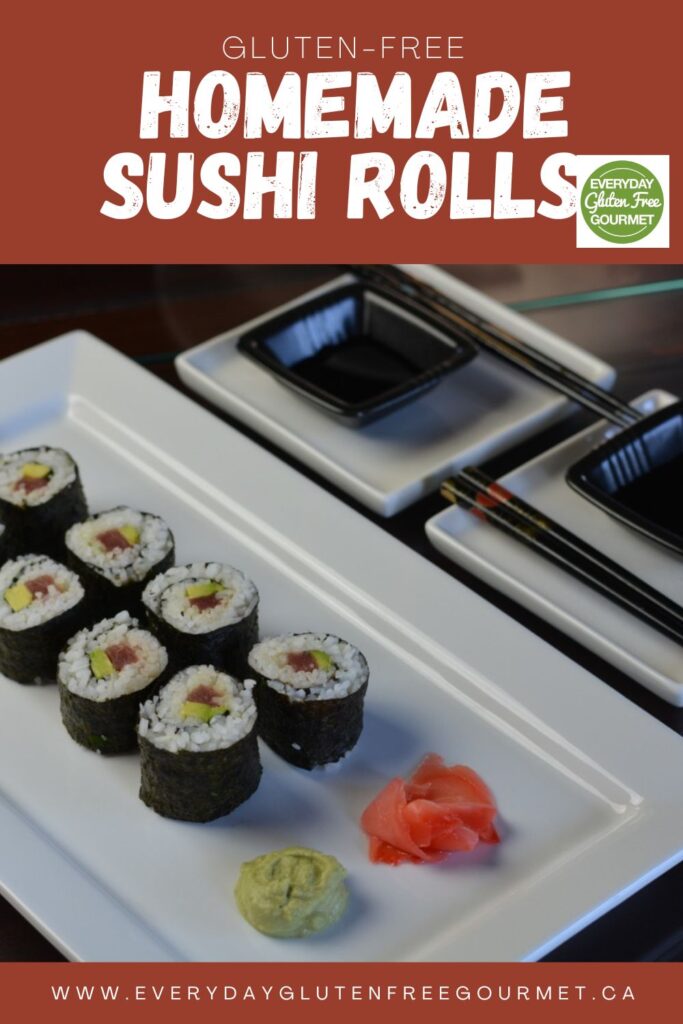

Adventurous cooks want to try their hand at gluten free sushi rolls and so they should. Learn what ingredients might have gluten in them and stock up your pantry. Then invite a friend to join in the fun and master hosomaki and futomaki rolls in one night!
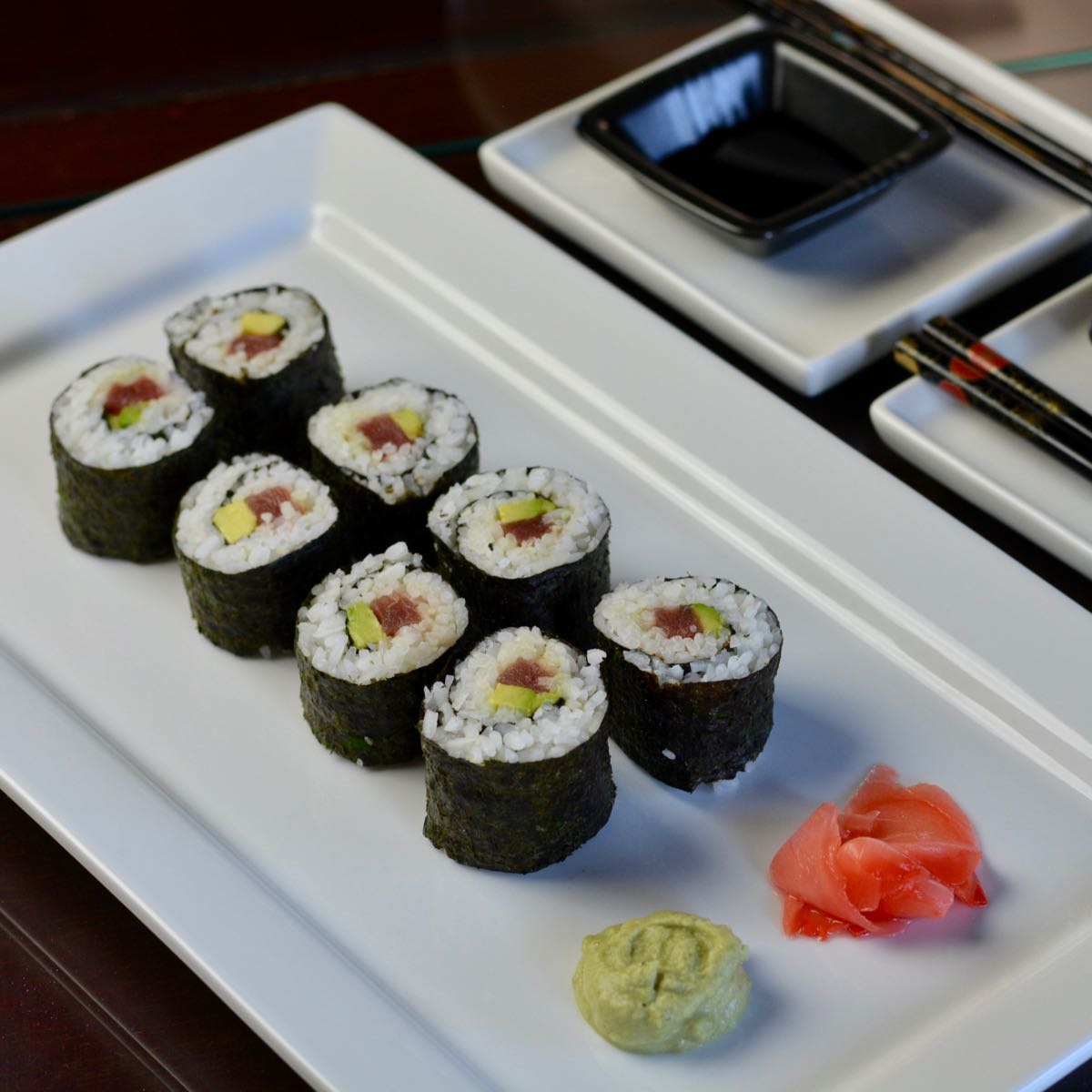
There are always questions for people on a restricted diet but most sushi is gluten free and dairy free so it's definitely worth trying at home. Once you learn the few places gluten might be hiding you can go shopping and plan a Sushi Night with friends.
Even kids like sushi and will take it in their lunch so it’s a great idea for family night too.
Jump to:
Best Sushi Rolls To Make At Home
There are many types of sushi rolls, or makizushi in Japanese. Maki refers to the 'rolled' sushi rice so this recipe is for hoso-maki and futo-maki.
You don’t need to know the proper Japanese names of the rolls to love sushi. I'm no sushi pro but I'll try making anything in the kitchen and I hope you will too.
For my sushi making cooking class I decided these are the best sushi rolls for beginners so we make three rolls in this order. The progression helps you learn and improve the technique of rolling sushi.
- Hosomaki: a thin roll with a single filling using half a sheet of nori.
- Futomaki: a thicker roll with several fillings using a whole sheet of nori.
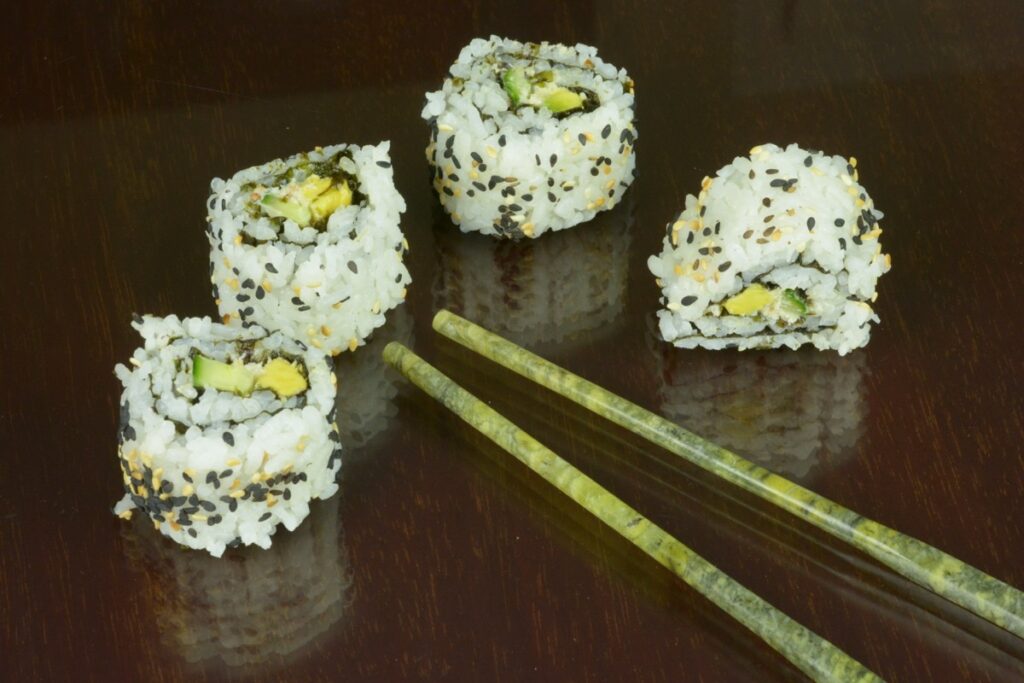
- California rolls: an inside out roll with rice on the outside and filling on top of the nori.
Like all food topics there's a lot to learn about sushi. For everyday home cooks I say just give it a try, even if you think it's a bit intimidating. You can look up the definitions of different types of sushi rolls and follow the rules if you want.
Or you can also just wing it!
This recipe is for two people using four sheets of nori. You would each make two rolls of hosomaki then one roll of futomaki to total of 15 pieces each. In two hours you could make twice as much from start to finish.
Multiply this recipe for the number of people you have or the amount of sushi rolls you want to make. Smart cooks can plan ahead and make enough sushi rolls for dinner and for lunch the next day.
🍣 Gluten Free Sushi Ingredients
Review this list of sushi ingredients before you shop then buy what you need to start making sushi at home. Even better do this with a friend so you can split some of the ingredients and both stock your pantry.
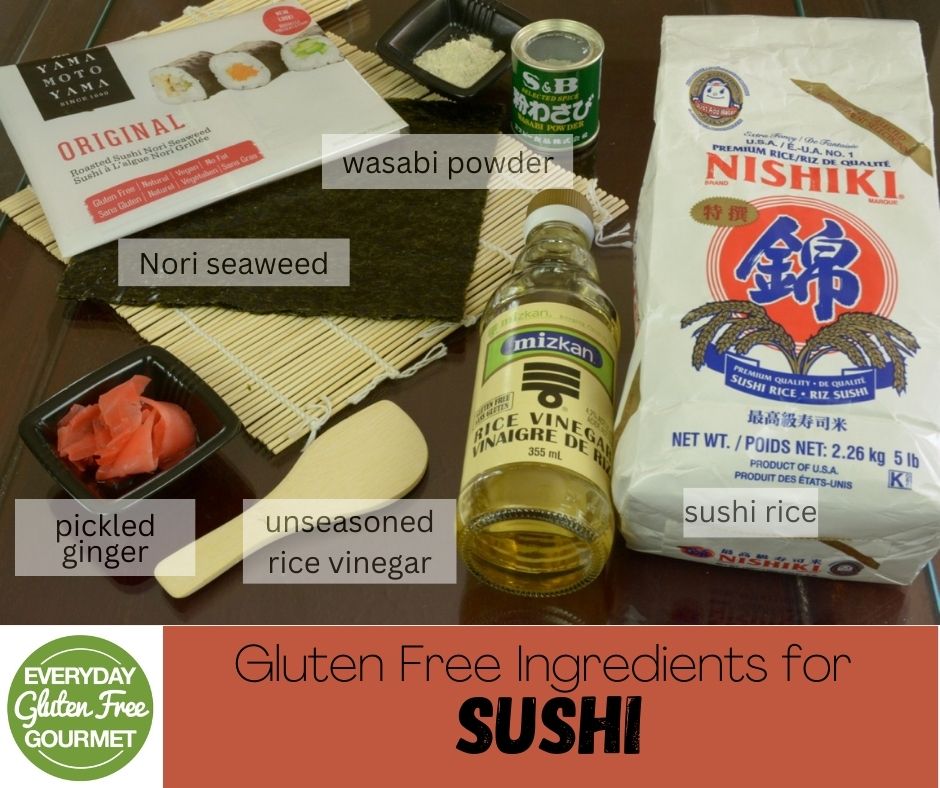
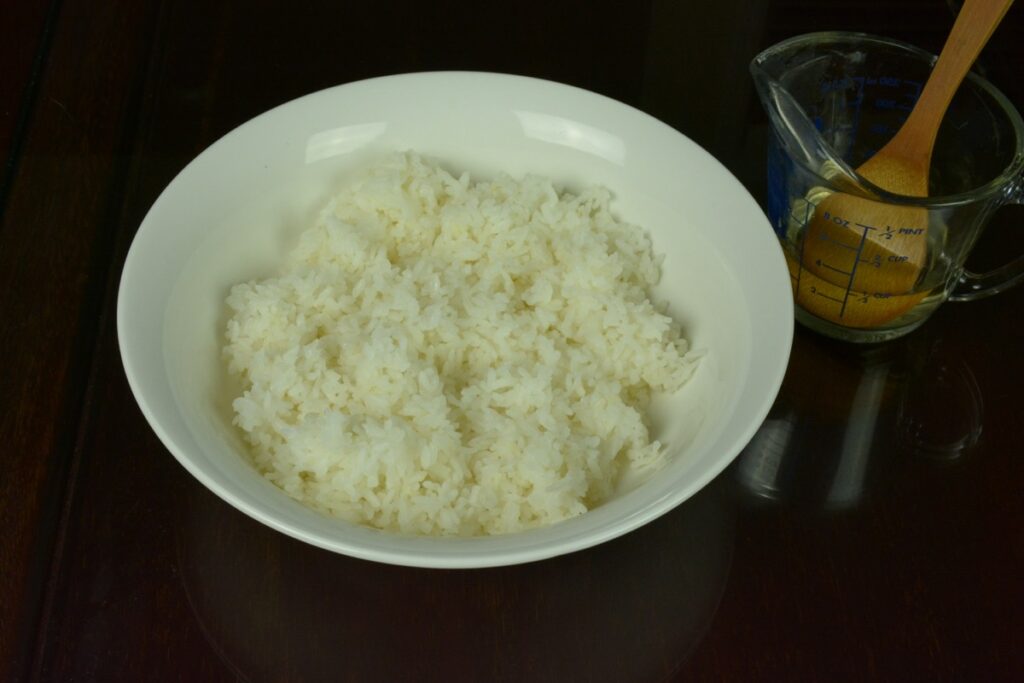
Sushi Rice - This short grain rice is different from the rice used to make risotto and like all rice it’s gluten free. Don't substitute.
Unseasoned Rice Vinegar - Seasoned rice vinegar sometimes contains wheat because...that's food manufacturing. Look for unseasoned rice vinegar.
Nori Seaweed - Sold in flat packages nori seaweed sheets may be toasted or not. They’re naturally gluten free and some packages even have a gluten free claim on them. I recommend buying the toasted ones.
Pickled Ginger - Japanese pickled ginger, sometimes called ginger pickles, can be pink or white. It should be gluten free unless it contains malt vinegar which is made from barley so read the ingredient label carefully.
Food colouring and preservatives may contain wheat too. I generally choose ingredients without preservatives when I can but I'm a sucker for the pink ginger. It looks great in photos, right?
Here's what I found online:
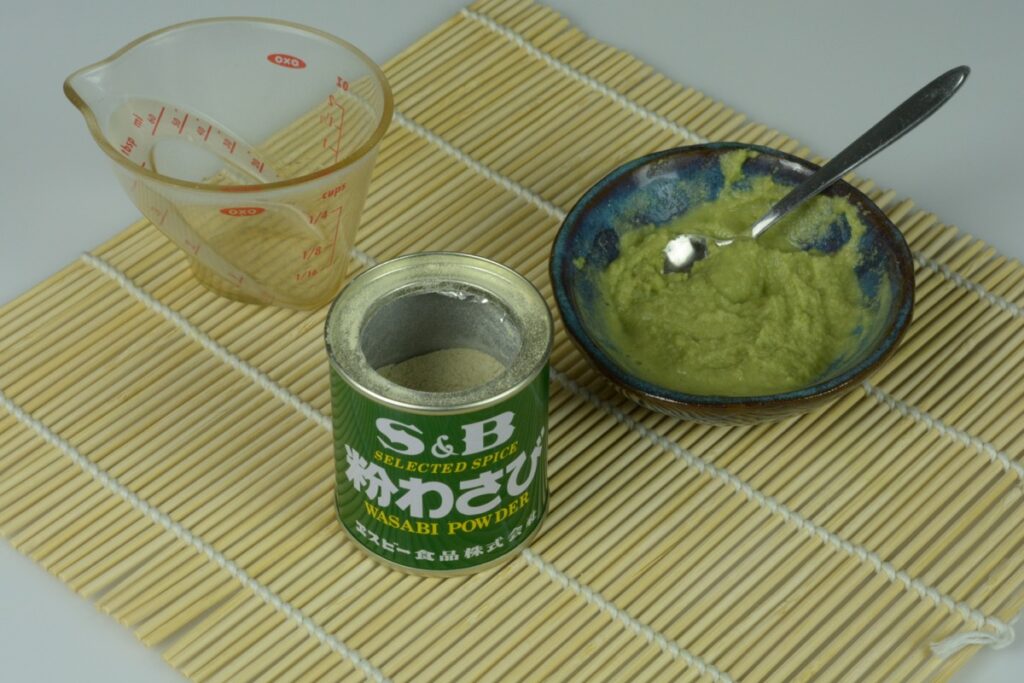
Wasabi Paste - Labels I see for wasabi-like paste and wasabi paste often contain wheat. I buy the small tin of wasabi powder and make it into paste in less than a minute.
Soy Sauce vs Tamari
You probably have soy sauce or tamari in your pantry already. Sushi is the best place to do a head-to-head challenge comparing brands of soy sauce and tamari. When I was new to gluten free I hosted a Gluten Free Soy Sauce vs Tamari Tasting with this Canadian Sushi Pizza recipe. It was fun and informative. Try it!
Sesame Seeds: Brown and Black
Like most single ingredient herbs and spices, sesame seeds are gluten free. I love the combination of both brown and black sesame seeds sprinkled here and there including on California rolls. Stick with me and I'll convince you to keep expanding your pantry just for fun.
How To Host A Sushi Making Party
There is so much to learn about sushi you could host a sushi party once a month and learn all year long. My best advice is always to just get started.
Many gluten free cooks I know are most happy when they are the host. Not everyone started out liking that idea but once they learned to enjoy it you can also learn to make the best of it.
Here's are 5 ideas to make being the host for a Sushi Making Party a win-win effort.
- Some friend groups will e-transfer money at the drop of a hat if you volunteer to buy everything. Plan accordingly and be sure to end up with the extra ingredients you want since you put in the time and effort shopping.
- If you prefer to have people bring ingredients then the skill you need is assigning the right person to the right job. Some people can only buy the brand name of soy sauce from your list while another person will enjoy the adventure of going to an Asian store and getting exactly the items you need, guaranteed to be gluten free.
- Get set for more sushi parties and buy supplies: Beginner Sushi Making Kit, fancier Sushi Making Kit with chopsticks and knife or bamboo mat with rice paddle sets.
- When neither of those options appeal to you have a mental list ready with an answer when people ask, "What can I bring?" Expensive wine, gluten free beer, a box of chocolates or frozen gluten free foods you love. Think outside the box.
- Savvy gluten free travellers, and sushi aficionados, know they can buy individual packages of San-J organic tamari. These are perfect for eating out and someone wants to add them to their Amazon order tomorrow.
K.I.S.S.
Keep It Simple & Safe is my advice for people learning to cook gluten free food everyone wants to eat. Aside from spending time with friends in the kitchen, the whole point of making sushi at home is so you don't have to worry about cross contact. So no more buying two brands of soy sauce! Keeping your eyes on dishes with identical black liquid is just crazy making. Have a glass of wine and talk about something else.
__________________________________________________________________________
New here? Overwhelmed or frustrated with your gluten free cooking? Improve your results with our GF flour guide and start making food everyone wants to eat.
🎉 Exciting news! Adventures in a Gluten Free Kitchen, our membership, is a fun way to learn and share with like-minded GF cooks who get it. There's always more to learn!
_________________________________________________________________________
Homemade Sushi Rolls: Hosomaki and Futomaki
Ingredients
SUSHI RICE
- 2 cups sushi rice (Japanese short grain rice, NOT arborio rice)
- 2¼ cups water
SUSHI VINEGAR
- ¼ cup unseasoned rice vinegar
- 4 teaspoon sugar
- 1 teaspoon salt
WASABI PASTE
- 1 tablespoon gluten free wasabi powder
- 1½ tablespoon water (add more for a thinner paste)
SUSHI ROLLS: HOSOMAKI and FUTOMAKI
- 4 toasted nori sheets
- 1 avocado, cut in thin strips
- 1 long English cucumber, cut in thin strips
- 1 sushi grade tuna steak*, cut in thin strips
Instructions
MAKE SUSHI RICE
- Rinse rice in strainer under cold running water for about 1 minute. Drain well.
- Combine rice and water in medium pot and bring to boil. Cover and reduce heat to simmer.
- Cook about 18 minutes, until all liquid is absorbed and rice is cooked.
- Transfer rice to large bowl and drizzle with sushi vinegar. Stir in a circular motion folding over the rice to evenly combine. Cover with damp towel if not using right away.
MAKE WASABI PASTE
- Stir wasabi powder and water. Set aside until ready to use.
ASSEMBLE HOSOMAKI (thin rolls with a single filling on half sheet of nori)
- Each nori sheet has marks where the rolls are to be cut. Using scissors cut nori sheet in half. Lay on bottom half of bamboo mat, rough side up.
- Wet your hands with water then cover nori sheet with rice going right to the edges but leaving ½-inch space across the top and bottom.
- Spread a small amount of wasabi on one end of the rice, covering the entire width of the sheet. This is the bottom edge where you will begin to roll up the sushi.
- Top wasabi with cucumber or avocado.
- Using the bamboo mat carefully roll the sushi using your fingers at both ends to keep the filling in place. If you used too much rice use less next time.
- Roll up the entire roll once, then roll and partially unroll, repeating to be sure the roll is pressed together. Place the roll on a cutting board and cut using a wet knife. Cut along the marks to make 5 pieces or eye ball it if you can't even see the marks. Optionally, cut the ends off if they are ragged, then cut the roll into even size pieces.
ASSEMBLE FUTOMAKI (sushi rolls with several fillings on full sheet of nori)
- Lay nori sheet on bamboo mat, rough side up.
- Wet your hands with water then cover nori with rice going right to the edges but leaving ½-inch space across the top and bottom.
- Spread a small amount of wasabi on one end of the rice, covering the entire width of the sheet. This is the bottom edge where you will begin to roll up the sushi.
- Top wasabi with cucumber, avocado and tuna.
- Using the bamboo mat carefully roll the sushi using your fingers at both ends to keep the filling in place.
- Roll up the entire roll once, then roll and partially unroll, repeating to be sure the roll is pressed together. Place the roll on a cutting board and cut using a wet knife. Cut along the marks to make 5 pieces or eye ball it if you can't even see the marks. Optionally, cut the ends off if they are ragged, then cut the roll into even size pieces.
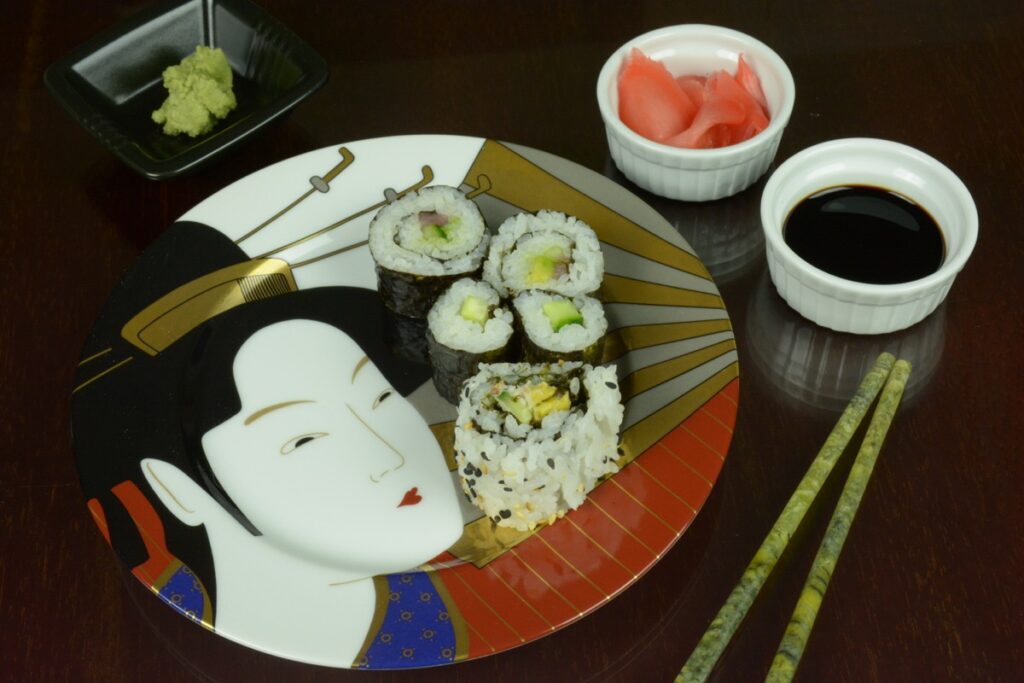
- Arrange thin hosomaki rolls and futomaki rolls on the same platter or separately. Serve with gluten free soy sauce, pickled sushi ginger and wasabi.
Steshni Corea
Would love to try a vegetarian version!!! with cucumber, avocado, imitation crab and maybe watermelon salmon?