











If you're new to the gluten free diet or celiac disease you need help. This is a food blog and I've got help for you in the kitchen. There's a lot to learn to simply feed yourself safely, but there's so much more to living gluten free. The good news, there is a community out there waiting to support you.
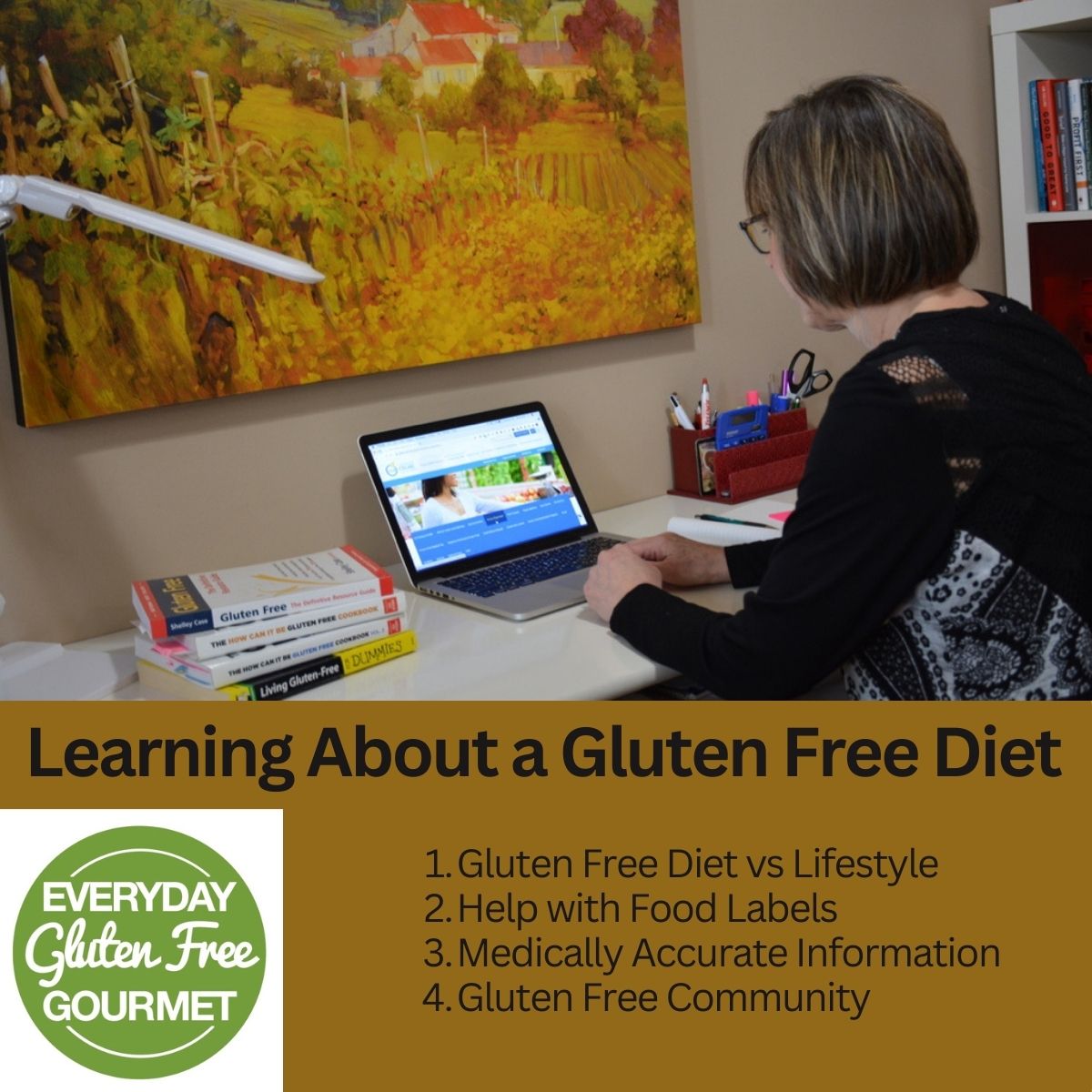
Where to start, what to read and who to trust are all important questions to ask. The amount of free resources is amazing but also daunting. I'm Canadian and we have Celiac Canada, an advocacy group with support from dieticians and so much more. Bookmark their website and visit often. Look for similar groups in your area.
Jump to:
Gluten Free Lifestyle vs Gluten Free Diet
The medical treatment for celiac disease is a strict gluten free diet for life. It's not a fad diet, it's not a choice, it isn’t for weight loss. Every time you eat gluten the small intestine is being damaged with significant health consequences.
Food is associated with almost every activity making gluten free food top of mind. There are very few activities we do that don't involve food. The food often contains gluten so when you're new it's overwhelming.
Typical diets for weight loss are short term and people often cheat. It’s natural for people to ask if you can cheat or just have a little gluten and this drives celiacs crazy. It can make you feel like you need to justify your lifestyle, the one you didn't choose but suddenly have. Dealing with this requires support and resilience. Learning to respond without being defensive is a skill others have mastered. Listen to what they say and create your own responses.
All the things you do make up your lifestyle. People with celiac disease cook, entertain, eat out, enjoy amazing food and travel the world. Here are a few things that might be new to your lifestyle.
- Taking your own food everywhere and anywhere even when you don’t want to.
- Eating dinner at home before you attend an event because there won’t be safe food to eat.
- Planning, researching, making a back up plan and calling ahead. Talking to hosts, managers, chefs and restaurant staff to find out if food is safe.
- Leaving restaurants or deciding not to eat when food is ‘gluten-friendly but not safe for celiacs.’
- Managing a chronic disease with a team of health care professionals to stay as healthy as possible.
Learning To Read Food Labels
Living a strict gluten free lifestyle means becoming skilled at reading food labels. Celiac Canada turned the old pocket dictionary into an app, Gluten Free 24/7. It lists thousands of words used on food labels and tells you whether a food or ingredient is allowed or not allowed on a gluten free diet.
There are also grocery apps available to help with this. Look online and ask on social media for feedback on what people are using and what they find helpful.
Learning to read and understand food labels has a steep learning curve. Celiac Canada has a Food Labeling Guide to help. Learning takes time so plan to do your best and expect to make mistakes.
The best news is that there’s a community of celiacs who understand and want to help others. Most people say the first year of learning about living gluten free is the hardest but they all agree it does get easier.
Trustworthy Sources For Medically Accurate Information
Social media is for being social and sharing your thoughts and opinions. When you want medical advice to manage a chronic disease look for trustworthy sources.
Many credible organizations including university hospitals are sharing great information on social media. Your job is to know the source of what you're reading. Bookmark what interests you and browse the free resources available to find what you need.
This is my short list of trusted sources for current information, celiac disease research and changes in how to manage a strict gluten free diet.
The Gluten Free Community is Bigger Than The Celiac Community
It’s important to remember that the gluten free community is larger than the celiac community. There are many reasons people choose to eat gluten free. Some are not concerned about cross contact (or not as concerned as you think they should be). Others have health conditions or symptoms that improve on a gluten free diet.
If you're celiac or cooking for someone with celiac disease you soon learn that there is a difference between eating gluten free and living a gluten free lifestyle.
Make your goal to create a gluten free lifestyle you love and your approach will be right for you. This small mindset shift will serve you well and help you focus on finding the help you need to be happy and healthy living gluten free.
Celiac Awareness Month
Every year in the month of May bloggers everywhere recognize Celiac Awareness Month in different ways in an effort to increase awareness. May 16 is Celiac Awareness Day and buildings around the world are lit up green to honour this day. Celiac Canada also has initiatives that might interest you so check it out early.
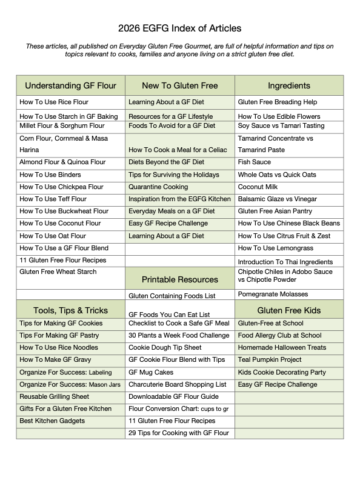
Over the years I've written more than 80 non-recipe posts focusing on help in the kitchen. Check out my 2026 Index of Articles to see the different topics. From flour to specialty ingredients, Dinner Club menus and more, skim the one-page index to see what interests you.
If you know anyone new or struggling with the gluten free diet please share these posts with them. I appreciate your support, they need the help and in turn this helps me keep my website running and sharing free content for the community.
__________________________________________________________________________
New here? Overwhelmed or frustrated with your gluten free cooking? Improve your results with our GF flour guide and start making food everyone wants to eat.
🎉 Exciting news! Adventures in a Gluten Free Kitchen, our membership, is a fun way to learn and share with like-minded GF cooks who get it. There's always more to learn!
_________________________________________________________________________



Leave a Reply